Friday, March 20, 2026

Teach Out Proposal

CHOOSE A TEXT: Review your whole blog to remind yourself about what we have read so far in class. What texts have stayed with you so far? What articles inspire you?  What topic matters most to you in terms of your own work? Are there any of these texts that you would like to share with others in your life? 

Shifting the Paradigm from Deficit Oriented Schools to Asset Based Models: Why Leaders Need to Promote an Asset Orientation in our Schools

-This text has stayed with me the most because it highlights my career and what I am doing the most compared to the other texts. This one inspires me to continue my work, uplifting students and showing what a positive community can do for the students themselves. 


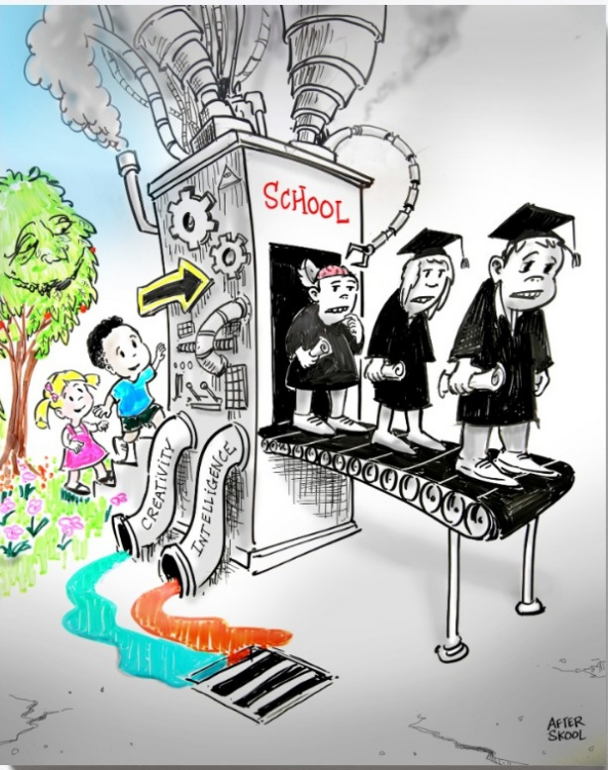
The Broken Model

-This text remained with me throughout the following weeks due to the fact that the education system does need a change. The administration is so focused on numbers rather than the potential of a student as a whole. This is important to my work because in UB we are required to conduct an annual report. In the report we must inform the government on the students' standardized test scores. Not, to see the passion of our robotics competition winner getting almost a full ride to WPI because their passion is within engineering. Not seeing that through a student’s experience in Upward Bound that they wanted to get a degree and come back and be a Tutor Counselor and help another generation of students. But a test score that they are continuously forced to take without any insight to our students' great capabilities.


WHO DO YOU WANT TO SHARE WITH? Are there people in your life with whom you would really like to talk about these texts? Colleagues? Students? Family members? Friends? Children?


I would like to share these texts with some of the students in my caseload across three schools in three different districts. 1-2 students from Providence, Pawtucket, and East Providence High School. At first I wanted to use my Center for Scholar Development office team; however, I am privileged in this position to know that the whole team already knows what is being mentioned in the texts. Since the class is called Social Issues in Education and we’ve heard all the adults talking, I felt it was more important to hear from the current students actually being affected and hear their opinions of the texts.


WHAT FORMAT MIGHT WORK FOR YOU? Individual interview? Small group discussion? Art activity? Professional development workshop? Poster for your office? Pamphlet to share? Lesson plan? Etc?


The format I’d like to present is a poster to show the students and how they feel about it and the weight of being a number to the education system. I could possibly make it an art activity to how they feel in the education system as a student. I also plan to interview them, asking a few questions on their involvement in a program and other ones in the community. I’d like to interview their opinions on their schools offerings, grading, and testing.


Wednesday, March 18, 2026

Supported Inclusion

 Title:  RI Laws and Policies; and PPSD Policy;  Queering Our Schools

Argument: The authors argument in Queering Our Schools is that adults need to create dialogue in the community and have more conversations on topics regarding LGBTQIA+ for students in the schools.

Talking Points :

(1) The text begins with a story of Sasha, who is assaulted and the student who set the clothing on fire was sent with two hate crimes as an adult. The family stressed that the student needed to be tried as a child and needs to be educated. This was very honorable for them to do. Sasha's family recognize that teenagers don't think through actions and took the opportunity to build a bridge. Hate is learned and things that aren't understood are immediately rejected so the fact that they helped reduce a sentence is admirable. I checked an update from 2015 and it mentioned the arsonist wrote two letters to the family taking full responsibility. I tried to find out where he was now and if he did change but was unlucky.

(2) On the top of 24 it says, "I realize this [agender] is a concept that even adults have difficulty wrapping their head around....so I can't pretend that's an issue that all young children will grasp. But what they certainly can and should understand is that different people like different things. Different people dress or behave or look differently. And that's a GOOD thing." I liked the end of this quote because it circled back to another blog I wrote about colorblindness and color insight. I wrote about how ten of the same people in a room would have limited ideas while a mixed group of 10 people with all different backgrounds would have never ending ideas. We as a society need different people to thrive. Speaking on the beginning of the quote I find the outcry of children not understanding a concept like this to be funny. I grew up without a father and no one was crying out to the school that their child found out I was being raised by a mom and grandma. I had to make our Father's Day arts and crafts out to my mom and was asked by another student why it was to "Mom" and not "Dad" why did 6 year old me have to explain not everyone comes from the same background and not that students family? Children ask a million questions I don't know why we aren't answering every single one of them truthfully and attempting to "protect" them when they're not in harms way to be educated.

(3) Toward the end of page 24 it states, "...No number of classroom discussions about gender and stereotypes and homophobia will create a nurturing environment if teachers and parents are afraid to come out." Followed, is a story of an editor in her coming out story to her school where she needed to call her Union in order to support her. This text came out in 2014 but feel like it is a very harsh request because since then, the Trump administration is has been attempting to tear down years of hard work in both terms serving. I just came across a tik tok the other day where a teacher replays a conversation where she doesn't know how to tell her students her fiancee is female. The comment section is flooded with people saying what she should say because children should know and replies saying she could lose her job for it, etc.. Especially with the current administration you'd be flagged in "progressive" areas never mind teaching anywhere "conservative" and being out without facing harassment where you're not receiving any support anywhere and become blacklisted. 

 Connections :

I use Facebook from time to time and unfortunately keep getting this one user who is a teacher at a Providence school's posts on my feed, so much that I needed to block her because of her hateful content. However, I did have to unblock her for this assignment because she is a reason as to my third talking point is so difficult to even attempt right now. In the photo she attention seeks for clicks and makes money off of insufferable people putting in their two cents when teachers and adults are trying to work around the hate for their students despite it being mentioned in their PPSD policies. The second photo won't attach so this is the link but she continues to tear down the attempts of inclusion regarding RI school districts trying to educate students...appropriately. 

On a positive note, we have a student who is nonbinary and goes by a really cool name they chose. They chose to be on a ballot for a Valentine's Day dance at their school this year and even though it was listed as a male and female winner, the scholar chose the male ballot to win with their friend and won. Those in charge immediately altered the "masculine" title to something more neutral. 

One last connection was that it took me a while to find this post I vaguely remembered seeing. This supports the third talking point since this teacher was supported by her higher ups and saw immediately positive results with students feeling comfortable. I saw that post and had a pride flag in my suite during the summer as a Tutor Counselor to show students who may identify, that I was a safe space for them. Although I had students at first who were confused, because they all knew my partner and that I was straight, I explained that having it visible could make students more comfortable. I currently have the same flag in my office. I was lucky enough to grow up in a very unconventional family where I was exposed to non straight people at an early age. Even though I didn't "process" it as a child...I didn't care. There was more important things like learning my times tables and logging onto the computer to play club penguin. Even now, the students in the program, they don't care how you identify they just want to have fun in the program and attempt to copy an answer every now and then.

 Reflections : In the Upward Bound Program I don't believe we have a section dedicated to LGBTQAI+ but I believe it's expected in our handbooks to teachers and students they receive under bullying and harassment, which you are immediately dismissed from the program. Regarding names, we have plenty of students who prefer going by different names in general we are just required to give memos teachers and staff before the student(s) arrive so they are aware of the changes and if it includes pronouns.

We work with many different students from different backgrounds, mainly Latin and African. This includes MANY conservative valued families that are close minded on topics such as this. My coworker was interviewing a mother whose son wanted to be in the program. She mentioned something asking about how the dorming situation will work because her son and his friend had applied to join and she doesn't want them in the same dorm because one of the friends is gay and doesn't want her son to be around them. My coworker explained that while you may have your views, our program does not and will not accommodate a request like that and went on to explain we are built on a community of opportunity and inclusion. 

In the past we had a student whose freshmen year was spent in a female dorm assigned as a female. During their second summer they preferred a different name, pronouns, and was still in a female dorm and we offered for them to shower in the Resident Manager's side suite but still preferred the female shower. His last summer he was comfortable and ready to live the summer in a male dorm. We made sure to assign them to a Tutor Counselor who knew what was going on, had selected students in the suite who knew them and wouldn't have an issue, and there were no complaints the entire summer from any students, families, or staff. Well, except for the fact that "boys are disgusting" as he got to experience how teenage boys kept their dorm bathroom "clean". 

 Edit : I just remembered that in our UB Summer handbooks, as a student in 2015-2017, there was a rule that opposite "gender" students could not enter a students private room at ALL or else you would receive a demerit and same "gender" students could be in student rooms and have the door closed. Now, in our handbooks it states, any student can enter another's room but the door must be WIDE open at all times. So, although we are not explicitly mentioning the usage of LGBTQAI+ terminology we have made many subtle changes throughout the handbook to include everyone without making scholars feel targeted. 

We also had a student two summers ago who was part Japanese and coming from a conservative home. They requested in the program that everyone could call them a different name and have they/them pronouns. However, when their parents came to Awards Night and other events, even pamphlets/certificates/slideshows they wanted to ensure that their deadname was on these things so their mother wouldn't say anything. After the student graduated high school they came out to their parents and currently live with their new name and pronouns.

Tuesday, March 3, 2026

Power of Culture

 Title: Other People's Children

Author: Lisa Delpit

Talking Points:

(1)The author lists 5 points for the readers regarding the "culture of power" to break down the silenced dialogue. On page 27 we learn of a job interview taped where an East Indian man is unfortunately losing grasp of the meeting due to the indirectness of the conductors who assumed they were helping him...but doing the exact opposite. This was in support of the last point Delpit was making, "Those with power are frequently least aware of - or at least willing to acknowledge - its existence. Those with less power are often most aware of its existence" (p.26).  When I interview students to be in our program, I acknowledge some of our questions are worded in a way where I know I will have to explain to some students and sometimes don't bother asking the original question and reframe it entirely for the applicant to understand. Thinking back, I wonder if I am doing a disservice or how I can improve that process to be smoother for our prospective students. 

(2) Delpit writes on page 36 about teachers indirectness and how it can harm the classroom, "...[The teacher] does not need to express any sense of personal power because her authority does not come from anything she does or says. Hence, the power she actually holds may be veiled in questions/commands...her indirectness [may be] an attempt to reduce the implication of overt power in order to establish  more non authoritarian classroom atmosphere...The black children may perceive the middle-class teacher as weak" A student being interviewed states, "She says that we're supposed to know what to do. I told her I don't know nothin' unless she tells me." I feel the most relatable case in the dominant culture of power is an example of a student's experience coming from the patronizing question by teachers when they respond to a bathroom request with "I don't know, can you?" A student who never had that happen before doesn't know you're supposed to start again with a bright smile on your face and ask in the kindest tone "MAY I use the bathroom?" while batting your eyelashes because the code was never taught. Furthermore, I began to think after reading about students being labeled as having behavioral issues that after the miscommunications and teachers give up...they give the direct order "Go to the office".

(3) On page 41 a Native Alaskan teacher Martha Demientieff says "[White people]...think everybody needs to talk like them. Unlike us, they have a hard time hearing what people say if they don't talk exactly like them. Their way of talking and writing is called "Formal English" "We have to feel a little sorry for them because they only have one way to talk. We're going to learn two ways to say things...When we go to get jobs we'll be able to talk like those people who only can really listen to one way." Towards the end of the reading on page 43 we are following a transcript between a teacher and student both who are black. At the end of the dialogue the student, Joey, says "...I guess theres a right and wrong way to talk, you know, not regarding what race. I don't know..." Teacher: but who decided what's right or wrong? Joey: "...I guess white people did." The teacher believing its important to speak on language diversity and power. Having students work through scenarios make them conscious of issues they never thought about. It continues to mention "Students begin to understand how arbitrary language standards are, but also how politically charged they are." I'm not totally confident on the blog this week but I feel as though this dips into students learning code switching on their own and not being informed of this cultural miscommunication but assimilating to the setting where they're not in a position with authority. The term is being used more frequently now on the internet, most likely being misused but are able to adapt to the dominant environment in order to attain what is needed/required. While also maintaining the individuals personal culture. In this link is a small clip about code switching but I wanted to highlight a quote, “The problem that needs to be changed is the value we assign to the way white people talk and the way we devalue the way black people talk” I feel that ties into the conversation between Joey and the Teacher where Joey is becoming conscious that there is no right and wrong way but the dominant culture doesn't see it that way.

Argument: The author, Lisa Delpit argues that students need to be taught by their educators of the codes in dominant cultures of power all while keeping their personal culture safe and preserved. 

Reflections: During the reading I became more intrigued by the direct orders versus indirectness and the impact on the students. It's no surprise that branches of military move into lower socioeconomic and non white communities to lure them into enlisting but I was wondering if people of color find the transition better because there's no questioning like in the classroom, just orders. While writing this blog and speaking to my partner, I was trying to explain what type of article or statistic I was looking for in regarding to following orders in the military and if non white personnel do better on average than white personnel initially when they're starting bootcamp due to not having to deal with the indirectness and coming from a culture where cut and dry instructions were given. My partner came from a strict Asian household and immediately attended the Coast Guard Academy for his degree after high school followed by 5 years of military service (3 years of which he was an Admissions Officer for CGA). He was mentioning that he really struggled in his first "civilian" job as an Associate Director of Admissions at Salve Regina University. He wasn't given orders like he had the last 10 years (along with another 15 years of home experience) and his higher ups were looking for more "initiative" from him. When asked what that would look like they couldn't really give him an answer. He lasted 4 months in the position. 

For some reason I kept going off topic into my own world during this reading thinking of the different impacts this had. Between the military forwardness. To how my students in Upward Bound are being taught by very diverse instructors, and if those instructors are aware of the culture of power. One instructor works at EPHS and is one of few people of color teaching there and comes to teach our students who majority are of color on Saturdays and during the Summer and if theres a better connection in one setting versus the other. I even tried to find clips of both Freedom Writers and Stand and Deliver to compare their authority in the classroom since one teacher came from the same environment as the students while the female teacher entered a classroom where she was the minority and experienced the backfire of indirectness and assumption.


Saturday, February 21, 2026

Who Would Have Thought?

Reading: Shifting the Paradigm from Deficit Oriented Schools to Asset Based Models: Why Leaders Need to Promote an Asset Orientation in our Schools

Authors: Renkly & Bertolini

Talking Points:

(1) To start, "Encouraging faculty creativity to foster students’ assets and work proactively is a first step in shifting this paradigm. Asset focused expectations must be modeled with faculty and staff by identifying their assets to determine how they can contribute to the school and community."(p.24) I felt this was spot on in the documentary we watched in class, Precious Knowledge. The teachers had a filled, colorful classroom with personal photos, pictures of leaders and focused on what the students could achieve. The students were gaining more strengths, competencies and interests in school just by having the teachers present in an alternative manner. The students were becoming more confident and invested in their learning. Teachers have a huge impact on a students view on a class. I have students who can receive a low D in one class because "I don't like what I'm learning and don't like the learning style" and an A in the other because "My teacher asks us what we want to write or read about and makes it entertaining". Keeping teenagers engaged in what their learning deserves its own award.

(2) Paraphrasing the top of page 25 we learn about external and internal assets, where external assets are provided by relationships formed with adults and the internal assets being formed for students to guide themselves. I found this to be incredibly important to this weeks reading since the readers are being informed that it will take a village to have successful students. They state the more assets students have its less likely students will exhibit risky behaviors. I've interviewed students for two years now and notice with Pawtucket we get lengthy discplinary records from students who attended Slater for middle school but are completely clean when they move into our target high school. One applicant stands out that I interviewed last month. On paper he seemed like he would create chaos being involved in our program from his 20 page discipline record from middle school (currently in 9th). When I got to speak with him I was interviewing a completely different person. He was calm, explained his issues, and he was lucky enough to have a caring mother to recognize his acting out and put him in Taekwondo. He had severe culture shock coming from another country, had teachers writing him up left and right, when he needed more guidance. I'm excited for him to start our program and meet more students and teachers who want to put in the time for him to express himself and find community.

(3) Later on that same page it states, "Scales et al. (2000) note that student time spent in youth programs is one of the most predictive elements to a child's thriving outcomes. Good youth programs are tied tightly with the community and provide students with access to caring adults, while also instilling the importance of leadership. helping others, and maintaining good health." After reading this week I do recognize that Upward Bound could be changed slightly, however, overall you can see the difference in students who make it through their first summer in the program. When students come to our program they are getting an almost personal guidance counselor. An adult who has more time to spend with them, helping them create their future. They have teachers, many who are alum of the program, willingly come to teach on Saturday mornings and in the Summer to get them more engaged. They find a community of students with the same goal of becoming the first to go to college. Many of these students may not have all these things in their own schools or at home. They start to branch out and join clubs and sports, volunteering with our program because they have people in their lives encouraging them. We have graduations and different awards nights to invite families to see what an impact our program has on them. We have "most improved" awards to shine light on those who did struggle in a subject and worked with their Tutor Counselors and teachers to power through. We have a One World Festival showcasing to families and the community what 60 students can learn in their language classes in 6 weeks followed by a fashion show. We have a few parents after every summer coming up to us saying how much their children have grown. My own mother included. I was a reserved child but from having the opportunity, guidance, and encouragement I completely came out of my shell. We are a great environment to support students and their families.

Argument - Renkly & Bertolini argue that by moving students into an asset based model from a deficit one, there are better outcomes expected through community involvement, engagement, and collaboration.

Connections - The Ted Talk was very insightful and the presenter, Sugata Mitra, was entertaining to watch. He said, "How come all the rich people are having these extraordinarily gifted children? What did the poor do wrong?" Its known that talent is everywhere but opportunity is not. As a society we would be lightyears ahead if we focused on the potential of every individual instead of having that overbearing need of unappreciated "essential workers" to push out. This connects in last weeks video referencing the "cogs" and just growing up to be another worker. By having this asset model with providing children with a computer and no other directions, students went out of their ways to find answers. Children's brains are sponges and can take in such information especially when they're in the "why" stage. All Mitra had to do was show up and have a student led learning process and now they were teaching him about DNA.  


Reflection - I enjoyed this weeks topic. I felt in the last few years how the Prussian model is holding students back from potential. Like I mentioned in my last post there has been a surge of montessori, language immersion, and CTE classes in the education system that don't align with the current model. I have a student who didn't feel challenged enough in her high school calculus class and sought out to take ACN courses in BOTH calculus and computer science. She is a brainiac but wouldn't have been able to reach these opportunities like receiving $225,000 in scholarship to attend WPI if she didn't have a strong support system both in our program, at school, and at home. Even with the amazing scholarship she is nervous about not having the money for the enrollment and housing deposit. She is still applying to every STEM and Women of Color opportunities along with our UB scholarship to get her to achieve her dreams.


P.S. Unrelated: This was my week to bring in snacks for Thursdays class and I'm upset because I specifically went to Costco to get nutella beignets for you all to try and the blizzard ruined it...anyways I didn't want them to go stale and they are really good heated in the microwave for 10 seconds...

Friday, February 13, 2026

Test Scores ≠ Student Capabilities


Schooling System Humor | SuperMemo.wiki

TITLE: Chapter 2: The Broken Model | A Short History of Public Schooling

AUTHOR: Khan | Class Dismissed 


Talking Points: 

(1) On page 70 it states, "The idea was to not produce independent thinkers, but churn out loyal and tractable citizens who learn the value of submitting to authority of parents, teachers, church, and ultimately king" I found this interesting and very slowly starting to backfire. There is a broken record that has been moving where millennials and younger generations were told "go to school, graduate, go to college, graduate, you'll get a job and it'll be great" That set back thousands of students. Although the were listening to what they were being told they all left institutions with debt in the hundreds of thousands in a job market where older generations refuse to retire from. There is a bitterness when the group who "did it right" wants to have their input on situations that won't affect them. So many missed out inventions and new ideas went into fields where they chose "stability" over "passion" because they listened.

(2) The last sentence on page 80 and continued onto page 81, Khan says, "Prussian-based public school model has come under attack from both the left and the right. Conservative complain tend to center on the alleged usurpation by government of choice and prerogatives more properly left to parents...Attacks from the left have tended to be surprisingly similar in tone, though the villain is not the government but the corporations that have the most to gain from a well-behaved and conformist population." The left view is mentioned by Laurie Couture from the Class Dismissed clip and connects to the talking point above regarding them to be "cogs". This link connects to a research study in showing how the parties view what's wrong with schooling. I find it intriguing that the right is focused on students not spending time on core subjects but also not viewing the lack of funding as an issue when they could go hand in hand. 


I fortunately have no clue who this person is however, I unfortunately couldn't contact her and politely ask what exactly history was...if not centuries of pushed politics and propaganda...I find it fascinating that she is so close to a break though.


(3)Lastly, on page 99 Khan states "The "best performing" student--that is the one with the greatest facility for catching on quickly at a certain level of understanding, and therefore the one with the highest test scores--will necessarily end up as the most accomplished scientist or engineer. That will depend on creativity, passion, and originality-things that begin where testing leaves off." This reminded me of an interview the other day with a student refugee from Afghanistan. She said in regards to the question, 'what does academic success mean to you', "I strive to be my best. I want to be able be able to understand what I am learning. I rather have a B in a topic I can understand the best of my ability than an A in the class but not understanding what I'm learning, just handing homework...assignments, not gaining anything." In her folder she did score low on her PSAT but she is striving to be a Neurosurgeon to understand her family's history of different brain traumas. She will succeed in the field because she has a passion for it and it very intelligent, but her PSAT score would do her harm.

Argument: The author argues that creativity is under appreciated and neglected from the STEM fields despite it being vital to careers and the push for test scores wears down education; the system needs to make changes.

Connections: Providence schools drill standardized testing to their students. I work in Hope High School out of our three targeted and I believe the students are so burnt out they've given up. PSAT, SAT, etc. It hurts our annual performance in Upward Bound because a student who took their first PSAT in 9th grade trying their best and now they're juniors on their 3rd or 4th PSAT before the Spring SAT they've given up. Our program needs good scores in order to receive their funding and we have bright students but they're tired of it. 

Its also interesting that although we started to 'equally" educated everyone...there's no uniform curriculum. Students have to hope their districts are providing the right information and have the resources to give thousands of students a chance into high fields. There is no equality in public education and testing alone won't fix it. 

Another issue is that this strict testing is a global problem. In Korea the government shuts down any air travel so students aren't distracted during their EXTREMELY important exam. While its very nice for the entire government to do this, it seems very unnecessary that the importance of this test affects elements outside the classroom. In China it is normal for student desk to look like this when they reach their test dates. In the United Kingdom, they have GCSE's which cause students thier own stress and A-Levels for specialized classes. Around the world testing is haunting students.

Reflection: I didn't realize how long we have been using this Prussian Model but felt like it needed to change the last decade and especially with the effects of covid. I related to the part with Nadia (pg.100) and the math placement test. There was an opportunity in middle school to take a test to learn Algebra I in 8th grade and start Freshman year taking Geometry. I always strived to "be" smart and wanted to take the test. I have never excelled in math and just barely scraped by. I just wanted to look good on paper and have a good grade but never fully understood any unit from there to my college math gen ed. In today's society there is a vast amount of opportunities for students which can be overwhelming for children and adolescents. I've seen more montessori options, language immersion, CTE schools but to districts, their numbers matter more than the benefits of these opportunities. Furthermore, there is a disconnect between students and these opportunities. In the community people are complaining that students from out of the city get bussed in to take CTC classes and that it should be reserved for East Providence students only. However, I see a lot of students NOT wanting to take the opportunity. Are they just lazy, burnt out, or coddled?

Saturday, February 7, 2026

You Don't See Color...What Do You Do At A Traffic Light? - Blog Two

Author: Margalynne J. Armstrong and Stephanie M. Wildman | Mellody Hobson

Title: "Colorblindness is the New Racism" | "Color Blind or Color Brave" 


Talking Points:

(1)  The authors explain, "Color insight contrasts with colorblindness by offering an alternative that better serves the purported goals of colorblindness: racial equality and justice. Color insight requires its practitioners to observe, discuss, and analyze the operation of race and privilege in contemporary society"(pg.68). There's an interview that repeatedly kept playing in my head as I was reading from Trevor Noah where he says "there's nothing wrong with seeing color, it's how you treat color that's more important." after the white, blonde haired woman says she doesn't "see" color and claiming to also go after a white woman politician. Noah offers to explain how negative colorblindness is and despite his efforts to educate, she immediately attacks by saying "when you start to loot, burn and riot". She is becoming more enraged and defensive than when she mentioned another white woman politician. Earlier on page 66 it states, "Whites often do not think about race and racial justice except when they notice people of color present" and that interview is a clear example of why it needs to be spoken more and not ignored. 

(2) On page 73 I found the Race Neutral Hypotheticals exercise of the attorney and the plaintiff suing for the improper dose of anesthesia administered before surgery interesting because I pictured the plaintiff as either someone with ginger hair and their resistance to some anesthesias or a black woman due to the significant neglect they experience in the medical field. At the end of the section it mentions that "teachers can help students make privilege visible and deepen their understanding of it operation." By having that tough conversation to students to recognize color exists beyond their own identity and for them to see that race can have real disgusting disadvantages, they are able to see through a lens that could help society in the future.

(3) In the Ted Talk, Hobson states at the end, "We have to be color brave. We have to be willing, as teachers and parents and entrepreneurs and scientists...to have proactive conversations about race with honesty and understanding and courage, not because it's the right thing to do, but because it's the smart thing to do, because our businesses and our products and our science, our research, all of that will be better with greater diversity." It seems that one of the few environments we see the actual progress of color bravery being a success is in the Olympics with our heterogenous society racking up thousands of medals throughout the years, and even then it took a long time for this and athletes still facing backlash/racism for embracing their background and their experiences of oppression. By having different people with different strengths; coming together will amount to great success.


Argument Statement: The authors Armstrong, Wildman and presenter Hobson all argue that society needs to embrace the conversation of color to enhance success in the workplace, the community, and schools rather than ignoring color and race, brushing it under the rug.

Connections: One connection I found in the article was on page 65, "...white plaintiffs sued to end programs that had sought to promote the inclusion of people of color in education and employment opportunities that previously had been foreclosed to them" In my sector, I've seen countless complaints from people asking where the 'white scholarships are', 'why does race need to matter?' 'everyone should have the same opportunity', their attempts at colorblindness completely ignoring the exact reason why the scholarships exist in creating equity. Also, last year TRIO was being severely attacked by the administration to be cut, mentioning that college is now accessible for those who want to go and in result there have been over 100 divisions canceled. Although anyone who is eligible to participate, a majority are students of color across all different TRIO programs in the country. Their implicit bias is screwing over thousands of white students especially in rural areas as well but to them it's a small cost to pay. If our programs were majority white populated there would be no head turning. We are now forced to rewrite our next Grant Proposal carefully not to include any mention of culture or inclusion. 

Reflection: I'm privileged to work in a very diverse office of individuals who proudly display their backgrounds; sharing stories, ideas, knowledge. Being able to work in the environment allows me to easily take part in color brave/color insight conversation as an observer, analyst and to sympathize in conversations. We all have different parts of our background that helps our work tremendously in a possible comparison if all the "Fortune 500 employees" were in the room. If a team had 10 different individuals who had knowledge and background to speak on, they'd be greater than the same person copied over 9 times with the same background and ideas. If colorblindness existed all of our students from Upward Bound to McNair scholars wouldn't be able to proudly display who they are and what they're capable of. We are successful because we are embracing the diversity in the work place of colleagues and in the education of students.

Sunday, February 1, 2026

All of us are the Problem - Blog One

Author: Alan Johnson

Title: Privilege, Power, Difference


Talking Points:

(1)  In Johnson's writing he immediately begins with the elephant in the room. He mentions "you can't deal with a problem if you don't name it; once you name it, you can think, talk, and write about it (pg. 11). Topics mentioning any diversity outside of the majority are often at times shot down; whether it regards to inequality of race, gender, class etc. because it makes some feel uneasy and defensive, even feeling imaginary guilt. 

(2) Later in the reading the author is addressing the fact that many social constructs are the root of the issue. He references James Baldwin on page 21 saying "..most of what we experience as "real" is a cultural creation...it's made up, even though we don't experience it that way". This reminds me of my undergrad when Professor Harkness challenged the class in what is considered a social construct. At first it was easy but as he went on the class took longer to decide, having students debate what we believed was to be true and authentic. Furthermore, the constructs are always changing. Like mentioned, the Irish and Italians were met with discrimination once they came flooding in to the States. Over time they have joined the majority. However, once passing the threshold of oppression they tore apart the next group of people rather than using their new privilege to help one another. This segue into the third talking point.

(3) Toward the end of the reading Johnson informs the audience of the concepts being versus feeling privileged in Chapter 3 on the end of page 36. The external presentation of privilege doesn't equate to the internal feeling. In my work we interview students between 14-18 years old to enter our program. We are government funded and have to ask specific census-like questions including 'what's a students ethnicity and race'. We had a student last year who was white and listed their ethnicity as 'New Englander'. On the other hand we always have a handful of students who will have Puerto Rico or Dominican listed on ethnicity and leave race blank because they do have a light complexion but internally aren't feeling that white privilege. We live in a society that wants to label everything but then rejects when people want to label themselves.

Argument Statement: This author argues that although people didn't choose their privileges due to the structures they were born into, it is crucial to address the powers, differences, and oppressions of their own backgrounds in order to propel society into being able to "treat one another with decency and respect and appreciate if not support the best we have in us".

Connections: An easy comparison of these social constructs and effects can be found in Jane Elliot's Blue Eye and Brown Eye Experiment. The second students find out their eyes give privilege they immediately change their attitude. Prior to their newly labeled lives, in an all white classroom they didn't see that much of their privilege until "society" decided some of them have privilege and others discovered what oppression is.


Reflections:
To reflect on this with my personal experience, I started the Upward Bound program when I was a freshman in high school. I went to a predominately white school and entered a space where I was 1 of 5 white presenting students out of 105. Although I didn't feel too uncomfortable not having majority of people who looked like me in there, 
I can't imagine what a young black student would feel entering a space with 100 white students with the privilege they are perceived to have. Being in the program really opened my eyes to all different cultures, backgrounds, and had uncomfortable conversations that led my to my love for Sociology in college. 


Teach Out Reflection

       In the Teach Out project I chose to focus on the reading, Shifting the Paradigm from Deficit Oriented Schools to Asset Based Models:...